THE IHSAA: HOW IT ALL
BEGAN
The
following text was re-printed from the book, The History of the Indiana High
School Athletic Association, and with the permission of its author, Dale
Glenn.
 “It happened down in
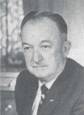
Phil N. Eskew
IHSAA
Commissioner 1962-1976
Before the
turn of the 20th century, secondary school administrators in
Imitating
their older “brothers and sisters,” high school students around 1890 began to
form their own “athletic associations.” They elected their own managers,
scheduled their own games, and played the only teams available. Predictably,
without supervision, disputes and brawls sometimes occurred. Although the
schools had no part in sponsoring these activities and generally resisted them,
these student groups were soon to be identified with their high schools and
caused considerable embarrassment for them.
As these
problems began to manifest themselves on a broader basis, school administrators
attempted to outlaw interscholastic athletics. Their positions were influenced
by the fact that persons other than students were permitted to play on athletic
teams representing the schools. Additionally, many teams were coached by
volunteer coaches who had no training as teachers, and many practices borrowed
from professional and non-school athletics were considered detrimental to the
cause of education.
Eventually,
educators had to decide whether athletics should be abolished or controlled.
Because of the popularity that had developed for athletic activities, it was
the opinion of the majority of school administrators that it would be
impossible to abolish them and that control of them would be the only feasible
alternative.
The first
attempt at such controls took place when schools began to form leagues or conferences
and to adopt rules. The first rule on record was that all players must be bona
fide students of the school they were representing. Other controls followed and
eventually became known as “eligibility rules”.
These early
attempts to control abuses, however, were soon proven inadequate because of the
fact that not all school administrators and school systems adhered to the controls.
Schools in certain geographical areas voluntarily agreed to abide by their
agreements, but as communication and transportation improved, schools began to
compete in larger areas outside the local conferences. Frequently, these other
conferences had a different set of rules. It thus became necessary to have a
wider based agreement that would cover all the schools in the state.
In April of
1903, a group of
THE
On
The
Richmond Evening Item
reported the agreement on page one:
One of the
most important matters acted on during the teacher’s convention was taken by
the high school teachers at a meeting not on the program. The meeting was held
yesterday for the purpose of taking action on high school athletics. An
agreement was reached which will have a material effect on interscholastic
contests between schools in the association. Before engaging in any athletic
contest, pupils must have a certification of qualification from the principal
of his school. In order to secure a certificate, a pupil must have been in
attendance at school from within two weeks of the beginning of the term, must
have been promoted at the end of the previous term or received at least three
credits under the credit system, must not be a graduate of any commissioned
high school. He must not have received remuneration for engaging in athletic
sports or given instructions in athletics, he must forfeit his place on the team
if he engages in smoking, intoxicants or improper language on the practice
field, and he must not have been represented in athletics in high school for
more than three previous years. It was also provided that teams should always
be accompanied by someone delegated by the principal of the school. It was
provided that all differences arising should be settled by the executive
committee of six.
The members
of the executive committee of six were: A.D. Crowe, Fort Wayne, president; L.E.
Wheller, Monticello, vice-president; Miss Lucy Allen,
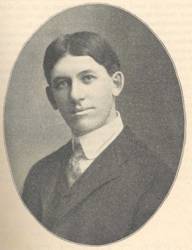
Attica, secretary-treasurer; and Joseph T. Giles, Marion; Cyrus W. Knouff, Kokomo, and A.M. Stickels,
Elkhart.
 Members of this committee, although
possessing executive power, were actually officers of the Northern Indiana
Teachers’ Association and had little time to devote to their responsibilities
with the athletic association. In part, due to this reason, the Richmond
Agreement did little more than point the way toward a stronger organization. At
the request of several high school principals who had used the Richmond
Agreement, a call was issued to principals over the state to meet in
Members of this committee, although
possessing executive power, were actually officers of the Northern Indiana
Teachers’ Association and had little time to devote to their responsibilities
with the athletic association. In part, due to this reason, the Richmond
Agreement did little more than point the way toward a stronger organization. At
the request of several high school principals who had used the Richmond
Agreement, a call was issued to principals over the state to meet in
THE
ORGANIZATION OF THE IHSAA
On December
5, 1903, at the urging of Anderson High School Principal J.B. Pearcy, representatives of about 50 Indiana high schools
met in the office of F.A. Cotton, State Superintendent of Public Instruction,
for the purpose of forming a state-wide athletic association. At this meeting a
provisional constitution was adopted, based on the constitution of the
Wisconsin Interscholastic Athletic Association. Through the courtesy of State
Superintendent F.A. Cotton, this constitution was printed by the Department of
Public Instruction and distributed to the high schools across the state.
 During these years, it was customary for the Indiana State Teachers’
Association to have its annual convention in
During these years, it was customary for the Indiana State Teachers’
Association to have its annual convention in
Although
preserved copies of this constitution do not state the purposes of the
Association, it was afterward stated:
The purpose
of this organization is the encouragement and direction of athletics in the
high schools of the state. No effort has been made to suppress or even to
repress the athletic spirit that is everywhere in evidence in our schools. On
the contrary, this organization gives recognition to athletics as an essential
factor in the activities of the pupil and seeks only to direct these activities
into proper and legitimate channels.
The rules
governing this association set up a minimum but uniform standard of eligibility
for membership. This standard has been shown by wide experience, not only in
this state, but in many states, to be a suitable one for large and small
schools alike. By this uniformity of requirement, neighboring schools which in
the past have often suffered from strained relations may now have a just basis
for the settlement of difficulties and a court of appeals in case of dispute.
The
executive power of the IHSAA was vested in a Board of Control of three members
to be elected at the annual meeting of the Indiana State Teachers’
Association. Its duties were stated as:
(1) controlling all athletic contests between secondary schools in the
Association, (2) determining forfeitures, and (3) issuing any year’s end
statements regarding the relative standing of teams.
Other
important items covered in the Constitution were: (1) The principal is
responsible to the Association for the control of athletics in his school, (2)
Membership in the Association is limited to public high schools in
The first
Board of Control was elected at this organizational meeting. It included George
W. Benton, Chairman, Principal at Indianapolis Shortridge;
L.D. Coffman, Treasurer, Superintendent at Salem; and J.T. Giles, Secretary,
Principal at Marion.
The number
of schools which joined immediately is not clear. However, on
By
With the
IHSAA launched and its membership increasing, noted educators began to see the
positive results the organization was achieving. Early publications of the
Association were replete with letters of praise for the work of the
organization. Mr. F.A. Cotton, State Superintendent of Public Instruction,
wrote:
I have
looked into the organization of the
Very
truly yours,
(Signed)
F.A. Cotton
Office
of the Superintendent of Public Instruction
The attitude of the presidents of the state’s two largest universities
were shown in letters to IHSAA Secretary J.T. Giles in 1905:
Athletics
can be one of the best or one of the worst things in connection with school
life. The IHSAA has the purpose and effect of purifying and controlling
athletics and should have general and hearty approval.
Yours
very truly,
(Signed)
Wm. L. Bryan
President,
…The
formation of your Association was a necessity, and has been from the first
heartily approved by all who understand the athletic situation in colleges and
high schools.
…I
desire to congratulate the Association on what it has accomplished in the
direction of correcting abuses, establishing right principals, and
demonstrating that athletic sports in their right relations are beneficial to
our young people…
Cordially,
(Signed)
W.E. Stone
President,
There were
words of praise and encouragement coming in from schools new in the membership
of the Association from all over
The
Association is working for the best interests of athletics in the
Charles
P. Keller
Principal
Our
experience during the three months of our membership in the Association has
been satisfactory. Some of our boys have worked, where last year they failed. I
am sure it is on the right track.
Samuel
Wertz
Principal
At a
meeting the principals of
R.A.
Randall
Principal
The good
work of the Association is simply superb and satisfying.
C.W. Knouff
Principal
I have
only words of praise for the Association, and feel that it is of great benefit
to all the schools. We had the same requirements in our athletic association
constitution, but the fact that schools of the state all stand for the same
thing is of very great advantage.
Anna
Wilson
Principal